
| Reviews & Columns |
|
Reviews DVD TV on DVD Blu-ray 4K UHD International DVDs In Theaters Reviews by Studio Features Collector Series DVDs Easter Egg Database Interviews Feature Articles Columns Anime Talk DVD Savant Horror DVDs The M.O.D. Squad Art House HD Talk Silent DVD
|
 DVD Talk Forum |
|
|
|
Columns
  

 
|
|
|
Un, deux, trois, soleil
Un, deux, trois, soleil is one of those weird films that makes a positive impression even as it disturbs with unpleasant and threatening images and ideas. It's an excellent example of Theater of the Absurd at its challenging best. A love-starved young girl in a depressed Marseilles housing project is battered from all sides. Just about the time we've recovered from one nightmarish moment (a deranged mother following the heroine to school, a teacher being threatened by rape-hungry adolescents), something happens that convinces us that writer-director Bertrand Blier is sending us a worthwhile message about love and children and human understanding. This crazy picture isn't an empty provocation.
With Un, deux, trois, soleil Bertrand Blier succeeds where other filmmakers have failed. I'm thinking of the attempts at the Theater of the Absurd that often play as strained, unfunny exercises where once we "get" the intended message, there's little point in watching further. Richard Lester's The Bed Sitting Room comes off as an incoherent set of music hall skits, and Pier Paolo Pasolini's La Ricotta and The Earth as Seen from the Moon are either message-heavy with verbal speeches, or just bad comedies.
Blier's film is sharp, alert and always throwing us a curve. All of the characters are engaging and sympathetic and there's a visible concern for the weak, the young, the hungry and the unloved that comes through the surface brutality of the film. Victorine's mother is forever dressed in a a slip and robe and is a familiar bundle of desperate emotions. Her father lives a Kafkaesque existence in bars, slowly poisoning himself. Clever kids change the markings on the interchangeable project buildings so he can't find his way home.
It doesn't make much difference because the projects are a teeming anthill of immigrant families, mostly from Africa. When the father finds the wrong door, they poor welcome him into their homes, whereas the rich sit atop their luxuries with guard dogs and shotguns. The father takes on a huge multiracial family of hungry kids ("They're all our children - children are everyone's responsibility") that always seem to be eating. The film is set in southern France but the soundtrack is all progressive African music by Cheb Khaled; these housing projects are another world where the unwanted underclass has been concentrated.
It's really not a pleasant world. Victorine rejects her overbearing mother but is willing to play games with the neighborhood toughs that include sex. In the absurd anthill world there are no visible middle class values and nobody bothers to talk about morality - hope and beauty are rare commodities and the kids seem to believed only in possessions and sensations.
The sex is where the film gets rough. There's almost no nudity, but a lot is suggested in scenes where underaged kids are engaged in precocious behavior or in proximity with suggestive activity. If The Tin Drum had one moment like this, Un, deux, trois, soleil has five. It's quite disturbing to see a dozen 11 year old boys pawing a teacher or the leading lady, and only an audience accustomed to this kind of abstraction is going to have the patience for it.
Blier shows a flexibility with his fantasy that only a master like Luis Buñuel can match. As in a abstract stage play, most of the characters exist in their own bodies and outside them at the same time; i.e., living a life but also commenting on that life in the third person. The visuals do the same thing - people change character and time jumps back and forth to illustrate emotional or intellectual leaps of consciousness. Victorine goes back to being a child once or twice, and imagines herself the offspring of the policeman's tender and loving wife, a huge African woman capable of reviving dead children with a strange replay of the sex act. When it comes time to meet her husband, she 'transforms' into an all-knowing spokes-seductress, discussing the sexual dynamics of the situation on a different narrative level. Interestingly, all of this reads like intellectual hoo-haw, but communicates quite well in the film.
Victorine plays multiple aspects of her personality as almost completely distinct characters: the innocent and fearful kid, the tough & obscene gang girl, the ethereal teacher of others. She finds herself in an uneasy marriage when she meets a man who accepts all of her personalities at once. A perfect example of the film's fractured logic is when she becomes furious at him for praising her cooking - the film flashes to an earlier scene of the same recipe being rejected by her mother as terrible.
The story also manages a completely understandable look at the mystery of love. Victorine is wooed by and loves the thief Paul (played by the soon-to-be heartthrob actor Olivier Martinez), and loses him to a homeowner with a shotgun. Her later love problems with her husband revolve around the fact that Paul has never really gone away - she thinks of him all the time, especially during sex. Un, deux, trois, soleil works out this problem in a wonderfully theatrical way - several "dead" characters including Paul come back to counsel Victorine's husband in the reality of romance. And it all works out!
Un, deux, trois, soleil is intellectually rough. It's also the kind of show that people with an unyielding definition of child pornography will object to. It's beautifully shot, crisply directed and well-acted, especially by the chameleon-like Anouk Grinberg. Marcello Mastroianni gives a solid appearance and not a glorified cameo. The show is an extremely successful example of a kind of black comedy that rarely works on film.
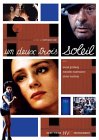
Home Vision's DVD of Un, deux, trois, soleil looks terrific in enhanced 16:9 and the lush Cheb Khaled soundtrack makes you want to go out and track down his albums. The disc is very smartly designed with an excellent graphic style both for menus and the cover art. It's easy to figure out that this is not safe & sane "family entertainment."
Sadly, there are no extras this time around except for a Bertrand Blier filmography.
On a scale of Excellent, Good, Fair, and Poor, Un, deux, trois, soleil rates:
Movie: Excellent
Video: Excellent
Sound: Excellent
Supplements: director filmography
Packaging: Keep case
Reviewed: July 20, 2004
| |
|



| Popular Reviews |
| Sponsored Links |
|
|
| Sponsored Links |
|
|
| Release List | Reviews | Forum | Blu-Ray | Advertise | |||
|
Copyright 2026 DVDTalk.com All Rights Reserved. Legal Info, Privacy Policy, Terms of Use,
Manage Preferences,
Your Privacy Choices 
| |||||||