
| Reviews & Columns |
|
Reviews DVD TV on DVD Blu-ray 4K UHD International DVDs In Theaters Reviews by Studio Features Collector Series DVDs Easter Egg Database Interviews Feature Articles Columns Anime Talk DVD Savant Horror DVDs The M.O.D. Squad Art House HD Talk Silent DVD
|
 DVD Talk Forum |
|
|
|
Columns
  


 
|
|
|
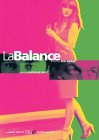
La Balance
The French crime thriller moved into the 1980s with Bob Swaim's slick policier about the violent give-and-take of crime on the streets of Paris. Laced with wailing pop songs and fast action, it's a standard take on underworld angst, but with a compelling love story thrown in as well. Nathalie Baye and Philippe Léotard are excellent, and the general excitement helps us get past more than a few clichéd moments.
In the 1970s, French director Jean-Pierre Melville's final crime films became increasingly stylized, while American William Friedkin initiated a new docudrama trend with his The French Connection. If Michael Mann's work is a continuation of the Melville line, Bob Swain's La Balance aspires to be a commercially-conscious heir to Friedkin's approach. Cops swagger down sidewalks and cruise the boulevards in dark glasses, joking among themselves while taking barely-legal action against their underworld enemies. Because the mob boss Massina never uses the telephone or writes anything down, informers are their only hope; and when no stoolie offers his services, the police use pressure and blackmail to create one. Hardboiled crime fans will probably find the movie slightly idealized, as the cops stretch the law only in extreme circumstances and heightened emotions get the better of both crooks and coppers alike.
La Balance has some outstanding features. The multicultural swirl of Belleville is captured in Parisian streets swarming with Algerians, Arabs and Eastern European immigrant criminals with names like Petrovic, Djerbi and Sanchez. Ethnic slurs comprise a lot of the dialogue, with the cops making jokes about Cous-cous eaters and an Israeli cafe owner telling squad leader Palouzi where to get off. Crime in Paris is presented partially as a race problem, giving La Balance the reactionary edge of Brian De Palma's Scarface.
Prostitution is also starkly portrayed, with the sidewalk girls soliciting sex in all manner of kinky costumes. The vice trade serves as the intersection between cops and crooks - the pimps and hookers can be seen as plying a semi-honest trade, while the policemen use them for information as well as sex.
At the center is a good love story. Nathalie Baye's Nicole and Philippe Léotard's Laffont are truly devoted to one another and stay loyal through an ordeal of police humiliation. The brazen Nicole seems impervious to pressure and has no problem physically assaulting Palouzi when she loses her patience. Laffont has a permanently sorrowful expression (thanks to Léotard's distinctive eyebrows) and tries his best to avoid disaster. Their relationship holds the picture together, but the script softens Nicole by never showing her with a client.
La Balance starts with neon-colored titles alternating with a disco beat and wants to be as visually hip as possible, yet at heart it's an old-fashioned cop story. The streets of the city are the 80s equivalent of Melville or Jacques Becker's dark 50s crime mellers. Director Swaim reaches for irony by covering the walls of police headquarters with French movie posters for Clint Eastwood movies and other violent American fare including La Horde Sauvage ( = The Wild Bunch). The main action setpiece, when a theft ring takedown turns into a shootout among helpless civilians, is practically an homage to Sam Peckinpah. The cops are afraid to fire while the main psycho triggerman (Tchéky Karyo of The Bear) blasts away with high-caliber sidearms he probably first saw in Dirty Harry. The retaliation by the police captain (Bernard Freyd) condones the Harry Callahan method of dealing with murderous criminals.
The script has a tendency to overuse exposition to make sure the audience follows the simple story. There are also some moments that seem less than inspired, such as when Laffont throws himself into a gutter in despair while Nicole attempts to console him. Otherwise La Balance is an engrossing and rewarding crime thriller in the French mode.
Home Vision Entertainment's DVD of La Balance is beautifully mastered with an enhanced image that makes the 1982 movie look brand new. The mono audio track showcases some catchy French pop songs. Richard Maynard provides illuminating liner notes. The only extra is an American trailer with horrible dubbing that gives the Parisians comical American accents and destroys the film completely. No wonder the film attracted little attention over here; in France it swept the equivalent of our Oscars.
On a scale of Excellent, Good, Fair, and Poor, La Balance rates:
Movie: Very Good
Video: Excellent
Sound: Excellent
Supplements: trailer
Packaging: Keep case
Reviewed: August 25, 2004
| |
|



| Popular Reviews |
| Sponsored Links |
|
|
| Sponsored Links |
|
|
| Release List | Reviews | Forum | Blu-Ray | Advertise | |||
|
Copyright 2026 DVDTalk.com All Rights Reserved. Legal Info, Privacy Policy, Terms of Use,
Manage Preferences,
Your Privacy Choices 
| |||||||