
| Reviews & Columns |
|
Reviews DVD TV on DVD Blu-ray 4K UHD International DVDs In Theaters Reviews by Studio Features Collector Series DVDs Easter Egg Database Interviews Feature Articles Columns Anime Talk DVD Savant Horror DVDs The M.O.D. Squad Art House HD Talk Silent DVD
|
 DVD Talk Forum |
|
|
|
Columns
  

 
|
|
|
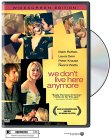
We Don't Live Here Anymore
Modern short stories can be excellent filmic springboards. This effort takes two pieces by Andre Dubus (In the Bedroom) and forms them into an intriguing character study. College towns have always been a favored setting for marital intrigue, perhaps because many ambitious writers come from that millieu; John Curran's thoughtful look at alienation and infidelity is more perceptive than most and ultimately more depressing.
The darkly-titled We Don't Live Here Anymore is a four-person character study cast with good actors suited to their roles. Mark Ruffalo's Jack and Peter Krause's Hank tend toward passive behavior with their unhappy wives. They have secure jobs but find themselves lacking. Peter is a casual womanizer and his resentful Edith has no qualms about reaching out to Jack, the husband of her best friend. Jack is superficially devoted to his family but boredom has made him unresponsive to his demonstrative, excitable wife Terry. Jack and Edith's steamy affair soon brings their opposite numbers together in a counter-affair that is part reprisal and part desperation. Soon the wives and Jack are a mess of anger and regret. Only Hank stays relatively aloof from the fireworks, preferring to wallow in his private world as a frustrated, unpublished author.
The film has excellent short-story touches. The focus on the four characters keeps the rest of their college town on the periphery; the party Edith throws to celebrate Hank's getting a single poem printed in The New Yorker is only seen in bits and pieces. Edith gets a letter from her mother with a big check, and we catch a glimpse of her mother's handwriting criticizing her worthless husband. The life and heart of both families are the children and we are given little snippets of school performances and playtime behaviors. Director Curran keeps returning to the warning lights of a railroad crossing, and we can't tell if he's using them to sound a silent alarm for the endangered relationships, or is perhaps foreshadowing some dark event to come.
We get some fine acting here. The husband & wife exchanges are appropriately muted as both parties sulk in isolation, and then burst out with emotional accusations and recriminations. Mark Ruffalo's husband likes to stay silent until Laura Dern's wife flies off the handle, so he can come back with stinging remarks that make it seem as though he's the voice of reason. Peter Krause and Naomi Watts avoid direct verbal assaults but instead simmer in controlled contempt for one another. It's all convincing and more than a little depressing.
There's some steamy sex, mainly as Ruffalo and Watts get together in a leafy forest or shack up in the nearest motel. But we also feel Laura Dern's frustration in making love to an unresponsive husband who gives nothing in return. Peter Krause's Hank lusts after various students, obsesses over a previous affair with a Frenchwoman, and is always ready to slide into whatever might be offered by his best friend's wife. He gets the least coverage and is the least likeable, but he's certainly true to type.
The film might be seen as a less complicated rethink of Joseph Losey's Accident, another film about bored and straying collegiate educators that sets its cinematic aspirations at a much higher level. This picture stays much more down to Earth, and stands on its own merit.
The characters in We Don't Live Here Anymore aren't isolated but they do seem to exist in a world with close boundaries, a holdover from the short story format, perhaps. Other reviewers have said that the film "might be even more effective" on a small screen, but Savant appreciates intimate big-screen entertainment. Every trip to the theater doesn't have to be to see escapist fantasy.
Warners' DVD of We Don't Live Here Anymore looks fine in its soft colors and delicate tones. The art direction stresses the beauty of the Northwest - although I understand Washington has far more rain than we see here. The audio environment is simple but effective. Besides an intriguing trailer, there are no extras. That's too bad, as the capable actors might have some good insights to share about this well-made, serious film.
On a scale of Excellent, Good, Fair, and Poor, We Don't Live Here Anymore rates:
Movie: Excellent
Video: Excellent
Sound: Excellent
Supplements: trailer
Packaging: Keep case
Reviewed: January 7, 2005
| |
|



| Popular Reviews |
| Sponsored Links |
|
|
| Sponsored Links |
|
|
| Release List | Reviews | Forum | Blu-Ray | Advertise | |||
|
Copyright 2026 DVDTalk.com All Rights Reserved. Legal Info, Privacy Policy, Terms of Use,
Manage Preferences,
Your Privacy Choices 
| |||||||